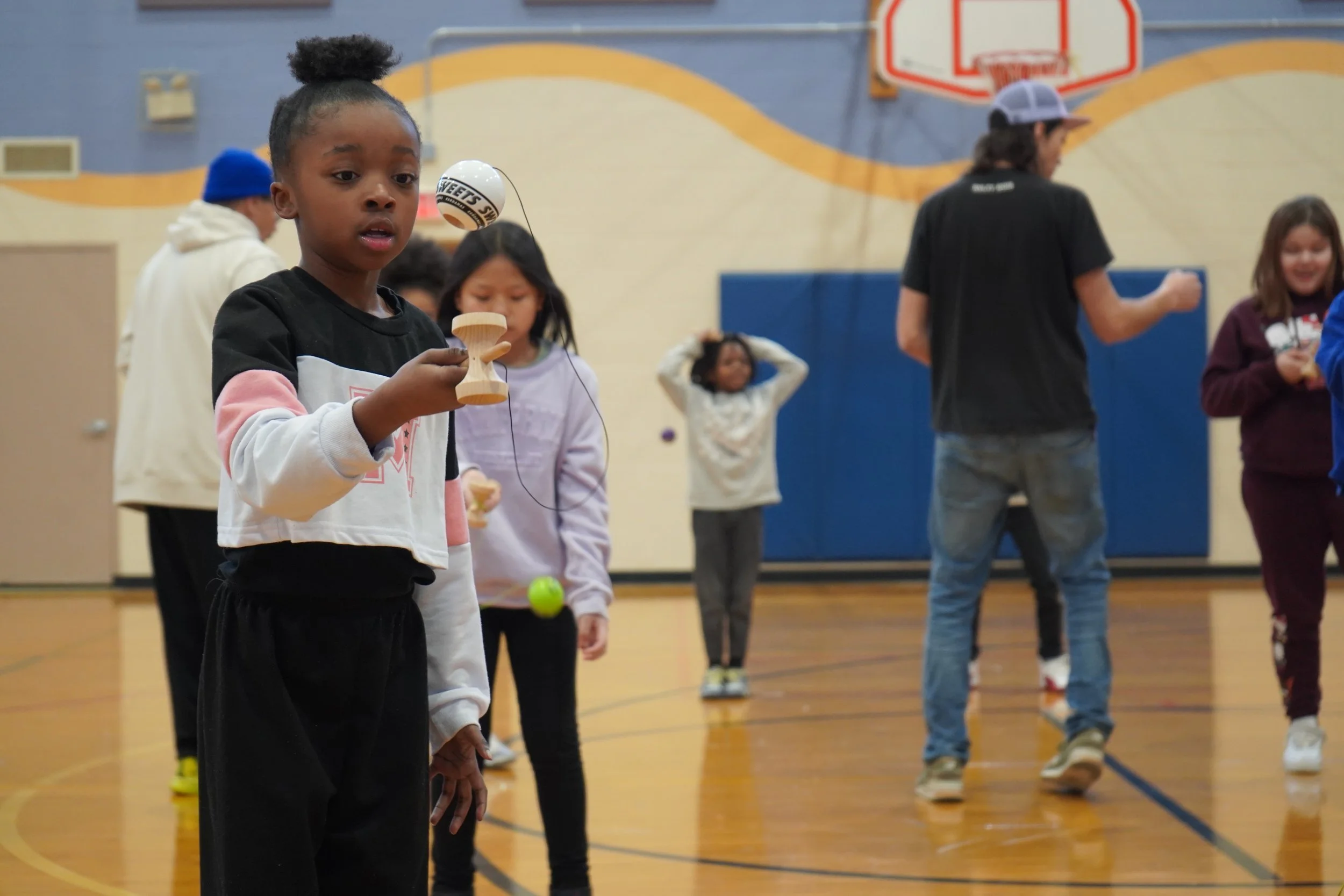
Helping kids unplug from screens
and plug into mindful play
Our programs teach emotional regulation skills and social-emotional learning through kendama play.
Our core pillars
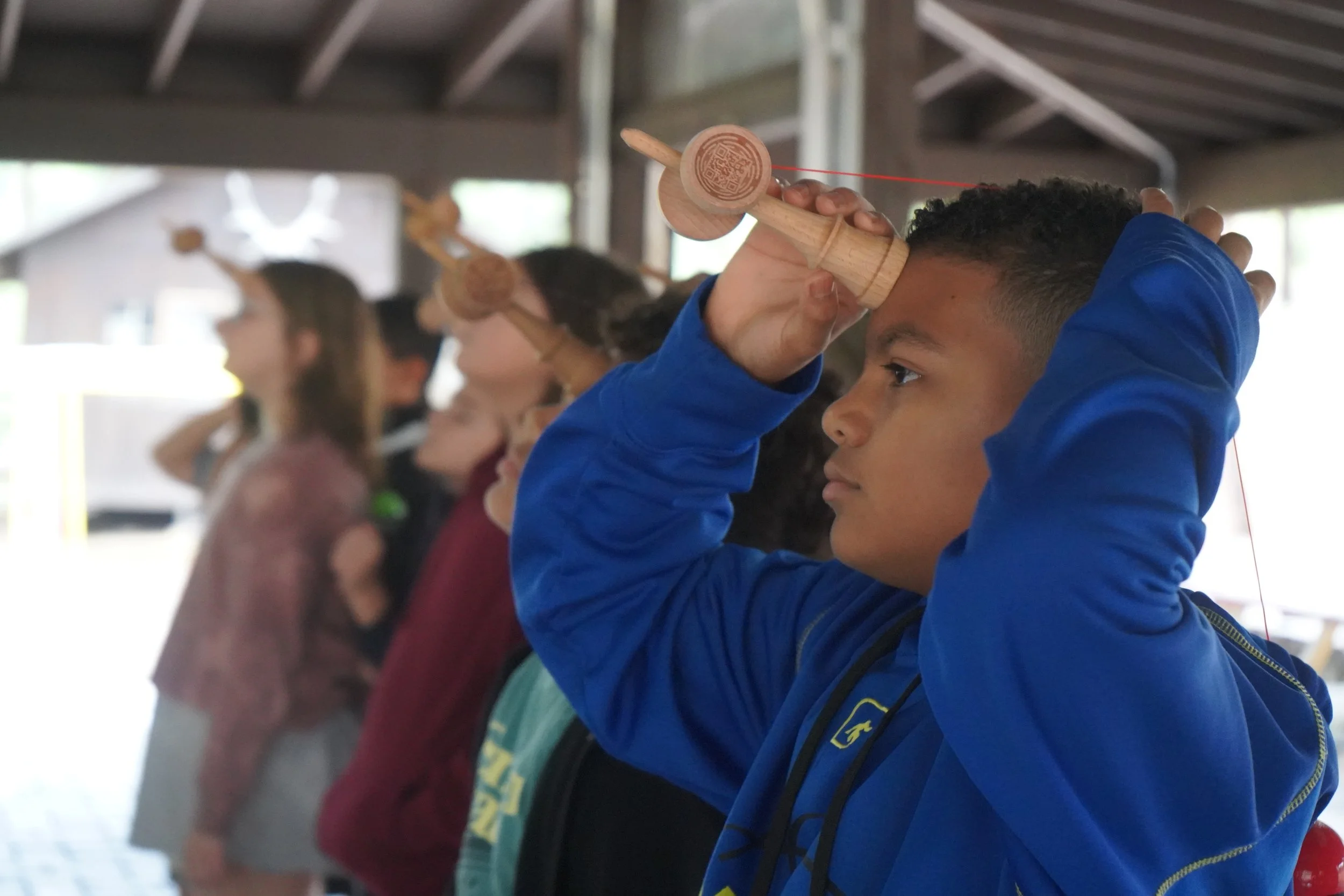
Breath Don’t Break
Mindfulness
Players learn how to notice their emotions and thoughts as they arise and take mindful moments to step back and observe the process, integrate lessons and achieve their kendama goal.
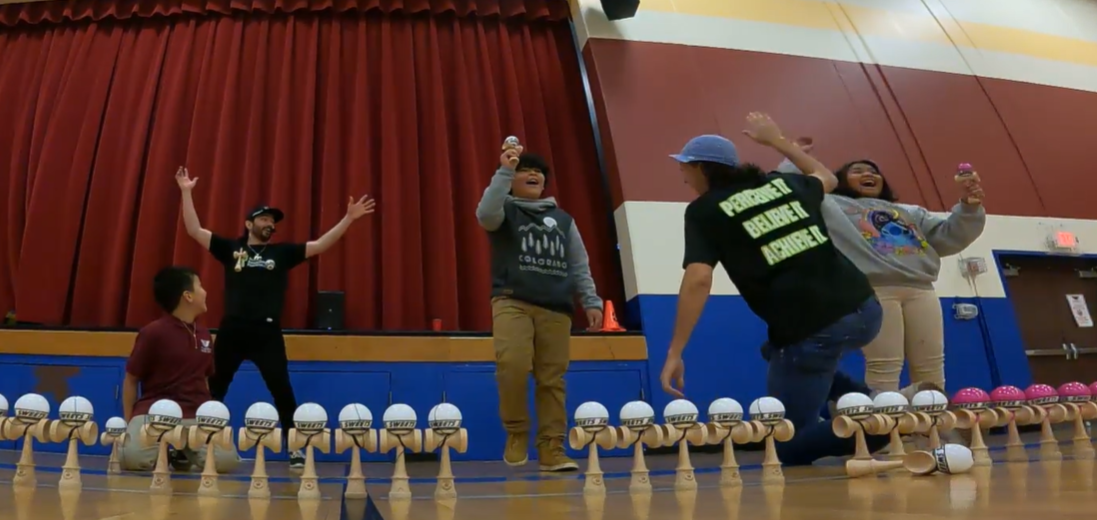
Hype Each other up
Growth-Mindset
Players learn to see missed attempts as opportunities to learn and grow. They learn to lift one another up when the going gets tough. They complete tricks they thought were impossible through positive self-talk and group encouragement. Their perceived limitations start to shift.
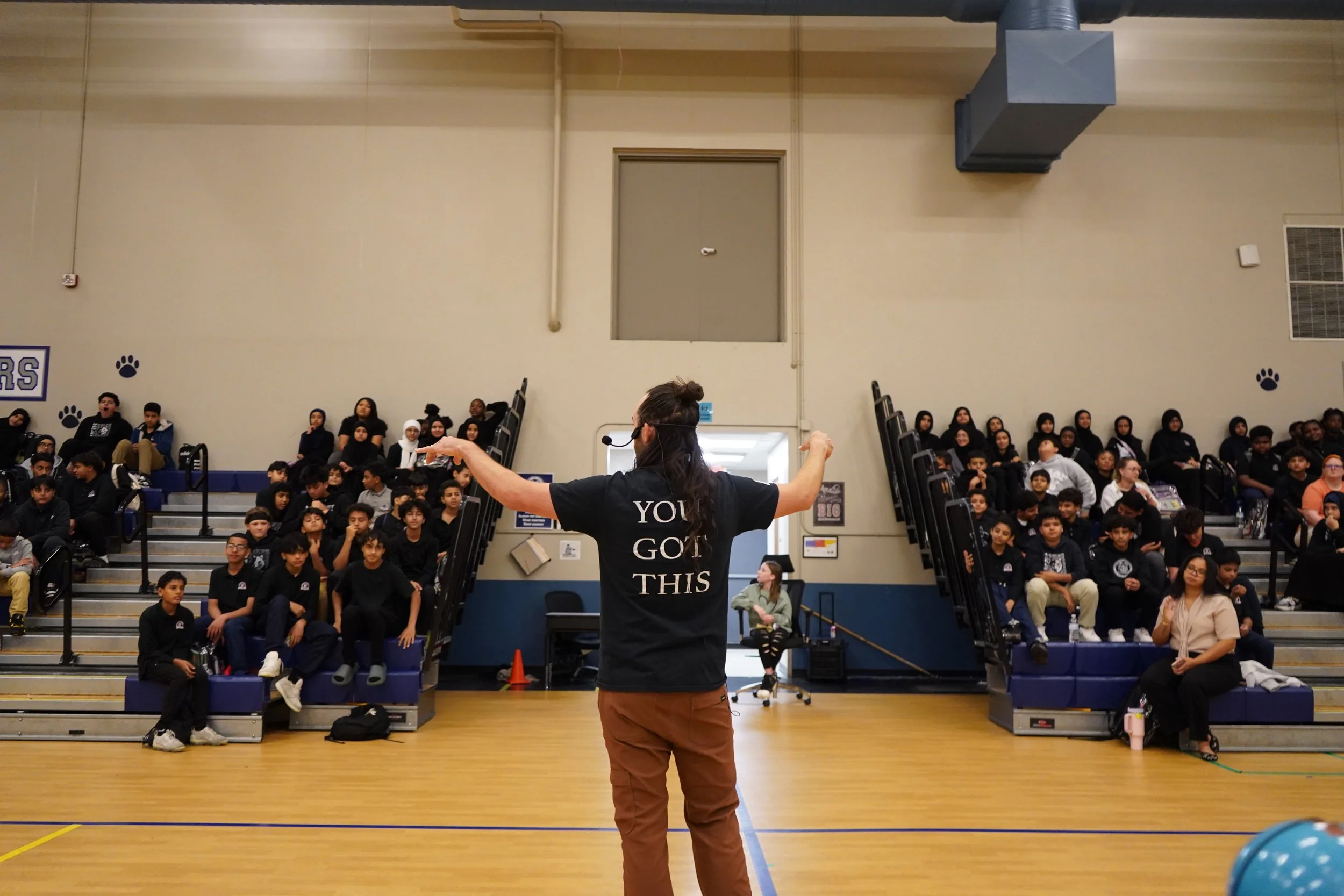
Kendama is for everyone
Social - Emotional Learning
Kendama brings people together from all sides of life making it the ideal activity to practice creating safe, inclusive and empowering spaces for everyone.
Students experience the power of growth-mindset as they achieve challenges they thought impossible at first.
First Spike challenge
Spiking a kendama seems impossible at first - Most people say they don’t think they can do it before trying it. Once they do land it, we ask them, what else do you think you can’t do? and why? You just proved you are more capable than you think.
We use this moment to discuss what it takes to achieve goals.
Mindful moment
As students play, they breathe and so they don’t break. Breathe and reset. Breathe and reflect.
Players take a mindful moment in between tricks to notice the sensations in their body and mind that arise from challenges. Feeling the anger and frustration dissolve and be released in live time allows lessons and life skills to be obsorbed and goals be achieved.
Quest Journal
Students reflect on their experiences as they try to land harder and harder kendama tricks. They become more aware of their emotions and how to regulate themselves.
Kendama as a Means for Academic Success
Kendamas are likely everywhere on your campus, and the first thought might be to simply ban the activity from school. Perhaps you already have! However, what if you could leverage the interest that students have with kendama to improve academic success and student engagement? Here are some academic and SEL skills that can be fostered by giving kendama a place in schools. Kendama can take place via our after-school enrichment programs, our P.E programs or even student lead kendama club.
Benefits of Kendama in Schools
Sense of Belonging: Giving kendama a place in schools can motivate students to show up and engage in learning because adults are supporting their interests. Kendama is bringing students together from all different sides of interests creating a more connected school environment.
Growth Mindset: Kendama, like learning any skill, is challenging. Students develop an active growth mindset through goal setting and problem solving while practicing kendama. Every failure is an opportunity to learn and improve. “Like Kendama, math is also challenging, let's try again..”
Self-Efficacy: Students realize that they are more capable than they first thought, building up their confidence and resilience. “You didn't think that the kendama trick was possible but you did it. You can finish this book too”
Emotional Regulation Skills: Students learn how to care for their anger and cool the flames. They become patient, reduce stress and practice self kindness towards themselves and others. “ It’s okay you are learning, breathe, reset, you got this”
Social Awareness: Students build an environment of encouragement and inclusivity. Sharing lessons and learning from one another.
Reduced Screen Time: Students are actively staying off of social media and video games the more they play kendama.
Physical Activity: Kendama is keeping students active! Not all students play sports but many students are drawn to kendama, it is bringing students together from all walks of life.
Clear Expectations / Code of Conduct: Like a dress code, there are clear rules set at school for when and where kendama play is appropriate and not. There are clear expectations of kendama safety and responsibility. Below are ways we as a 10 year kendama education non profit have helped schools foster the benefits of kendama in schools.
Kendama Code of Conduct
By bringing a kendama to school you agree to having your kendama taken by a teacher if you do not follow this code of conduct.
I agree to be an active an engaged student in all my classes and will not play when it’s not appropriate
Kendamas stay in my backpack until recess or agreed upon time set by the administration or teacher
I will never swing or throw my kendama in means of a weapon
I will always use my kendama in a safe space with no body close by
NO pink slips or playing Ken for Ken games ever allowed
If my kendama is taken by a teacher I will make an agreement with my teacher to earn it back
Kendama is a privilege in schools and I will be an active ambassador for responsible and respectful kendama.